
Loading...
Serving Laredo, TX and surrounding areas. (956) 539-8021
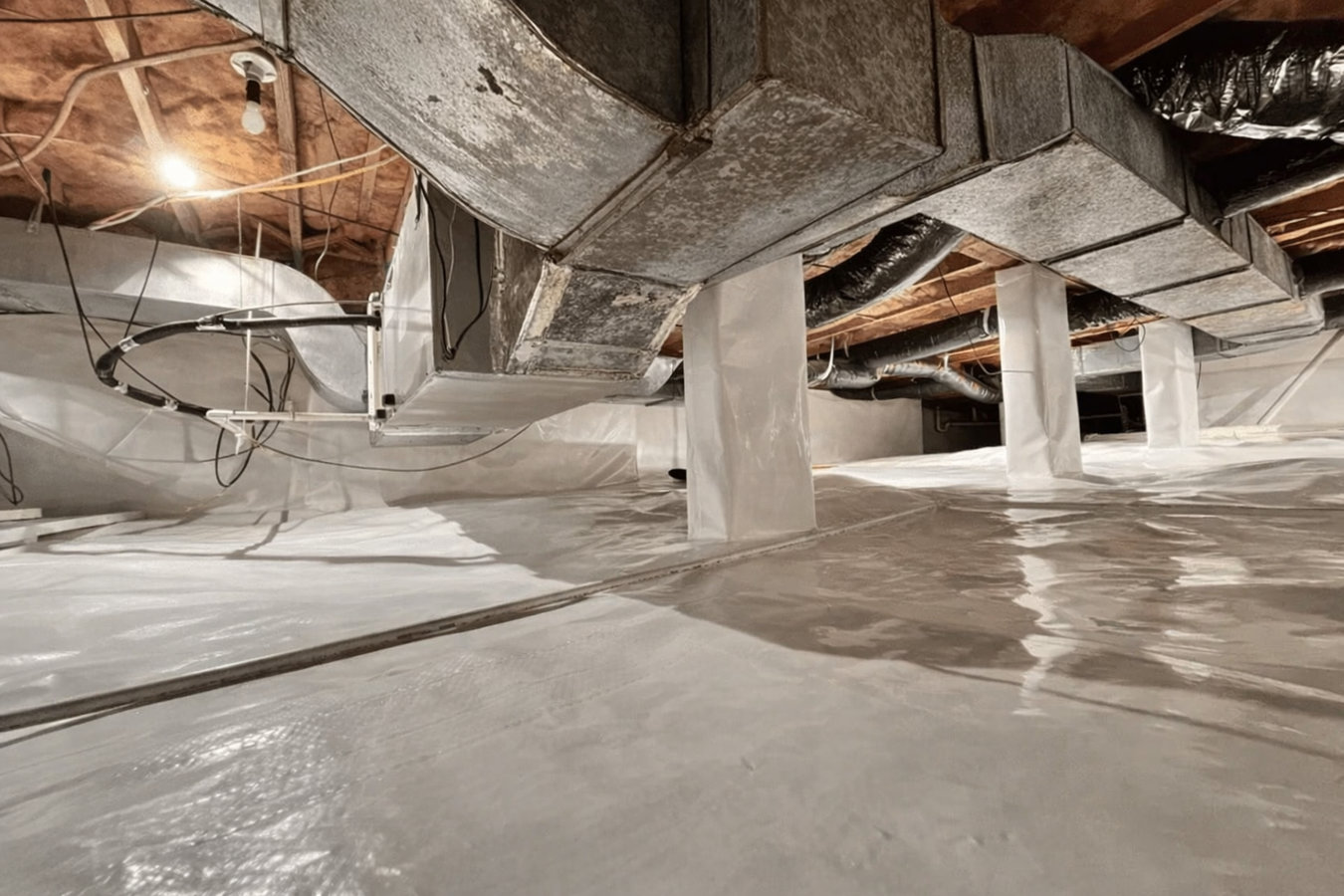
Ground moisture rising through your crawl space silently rots wood, breeds mold, and raises your energy bills. A properly installed vapor barrier stops it at the source.
A crawl space vapor barrier in Laredo is a thick plastic sheet installed across the bare dirt floor of your crawl space to block ground moisture from rising into your home, most installations complete in one day with no need to vacate your house.
Laredo's clay-heavy soil holds moisture year-round, and when summer temperatures push past 100 degrees, that ground moisture evaporates upward with intensity. Without a barrier between the ground and your living space, that moisture feeds mold, softens wood framing, and makes your air conditioner work harder than it should. Many homeowners first notice the problem as a musty smell or a slight bounce in their floors.
A vapor barrier works best when paired with the right crawl space setup. If your home also needs insulation underneath the floor, our crawl space insulation service addresses that in the same visit. Homes that have both moisture and air movement problems often benefit from combining the barrier with our vapor barrier installation work that includes wall coverage and full encapsulation options.
If certain areas of your floor give slightly when you walk on them, the wood framing underneath may have been absorbing moisture for a while. In Laredo's older pier-and-beam homes, this kind of floor movement is one of the earliest visible signs of long-term ground moisture damage. Catching it now prevents a far more expensive repair later.
A damp, earthy odor that appears or worsens during Laredo's summer rainy season almost certainly originates below the floor. Ground moisture and early-stage mold both produce that distinctive smell, and it tends to get stronger as outdoor humidity rises. No amount of cleaning addresses it until the source in the crawl space is sealed.
Water droplets forming on pipes, metal ducts, or the underside of the floor are a direct sign of excess moisture in the crawl space. In Laredo, this is especially common in summer when hot, humid outdoor air enters through foundation vents and meets cooler surfaces underneath. A vapor barrier addresses the ground-level source of that moisture.
If you bought an older Laredo home and no one has looked under it in years, you simply do not know what condition the crawl space is in. Many homeowners find either no barrier at all or one that has torn, shifted, or degraded. A quick free inspection gives you a clear picture before any damage compounds.
We install heavy-duty polyethylene vapor barriers in crawl spaces of all sizes across Laredo. The standard installation covers the full ground surface with thick plastic, overlaps and tapes all seams, and runs the edges up the foundation walls so there are no exposed gaps at the perimeter. The thickness of plastic we recommend depends on how often the space is accessed and the severity of moisture conditions in your specific area of the city.
For homes that need more than a basic ground barrier, we offer full crawl space encapsulation as part of our vapor barrier installation service, which includes sealing the walls and, where needed, addressing ventilation. If you have crawl space insulation needs at the same time, we can combine both into one visit so you are not scheduling two separate crews.
The U.S. Department of Energy recommends proper moisture control as a foundational step before any crawl space insulation work. See their moisture control guidance and the EPA's indoor air quality moisture page for background on why addressing this matters.
Suited for most Laredo homes — covers the full dirt floor with sealed seams and wall edges to block upward moisture movement.
Best for crawl spaces that are accessed regularly for plumbing or HVAC work, where thinner plastic would tear over time.
Suited for homes with persistent humidity problems or crawl spaces that have experienced long-term moisture damage.
Best for homes that need both moisture control and thermal insulation under the floor in the same project.
Laredo's surface climate feels dry, but that impression breaks down when you look at what is happening under your home. The city's clay-heavy soil holds residual moisture year-round, and the Rio Grande Valley's groundwater table means the ground beneath many older neighborhoods stays damp even during extended dry stretches. When summer temperatures push past 100 degrees, that ground moisture does not stay put, it evaporates upward through your crawl space floor with intensity.
Many of Laredo's established neighborhoods contain pier-and-beam homes built in the 1950s through 1980s, long before vapor barriers were standard practice in South Texas construction. If your home is more than 30 years old, there is a real chance either nothing is protecting the crawl space, or whatever was originally installed has torn, shifted, or degraded beyond any useful function.
We install crawl space vapor barriers throughout the Laredo area, including homeowners in Zapata, Eagle Pass, and Del Rio, where soil conditions and older housing stock create the same challenges as in Laredo.
Call or submit the form and we will respond within 1 business day. We schedule a free crawl space inspection rather than quoting blind, because the size, access, and condition of each space varies too much to estimate accurately without seeing it.
We access your crawl space, assess the size of the space, review any existing barrier condition, and check for moisture damage or mold. You receive a written estimate that states exactly what is included before you decide anything.
The crew clears any debris, unrolls heavy plastic sheeting across the entire ground surface, overlaps and tapes all seams, and runs the edges up the foundation walls. Most Laredo crawl spaces are complete in one day. You can stay home throughout.
Before leaving, we show you photos of the completed installation confirming full coverage, sealed seams, and secured edges. Within a few weeks you should notice the musty smell fading and your home holding a more consistent indoor temperature.
We inspect your crawl space at no charge, give you a written quote, and let you decide at your own pace. No pressure, no commitment.
(956) 539-8021We have inspected and installed vapor barriers in homes throughout Laredo, from older pier-and-beam houses near downtown to newer slab-adjacent construction in North Laredo. We know what this city's soil conditions do to unprotected crawl spaces.
Every crawl space job is handled by crews with years of hands-on experience working under South Texas homes. We treat your home with care and document the work from start to finish.
We do not quote vapor barrier jobs over the phone. A real estimate requires seeing your crawl space. We respond to every inquiry within one business day and schedule the inspection at a time that works for you.
Because the crawl space is out of sight, we take photos during and after every job. You see exactly what was installed, where the seams are, and how the edges are secured, so you are not left guessing about work you cannot easily check yourself.
We have worked on homes throughout Laredo and the surrounding region since 2022, and our crews know the crawl space conditions common to South Texas housing. Every job starts with an honest inspection and ends with documented proof of what was done, including photos you can keep on file.
Full crawl space encapsulation options including wall coverage and mechanical ventilation for homes with persistent moisture problems.
Learn moreThermal insulation installed under your floor joists to reduce heat transfer between the ground and your living space.
Learn moreBeat the summer rainy season and get your home protected before Laredo's humidity peaks. Inspections are free, written quotes carry no obligation, and we respond within 1 business day.