
Loading...
Serving Laredo, TX and surrounding areas. (956) 539-8021
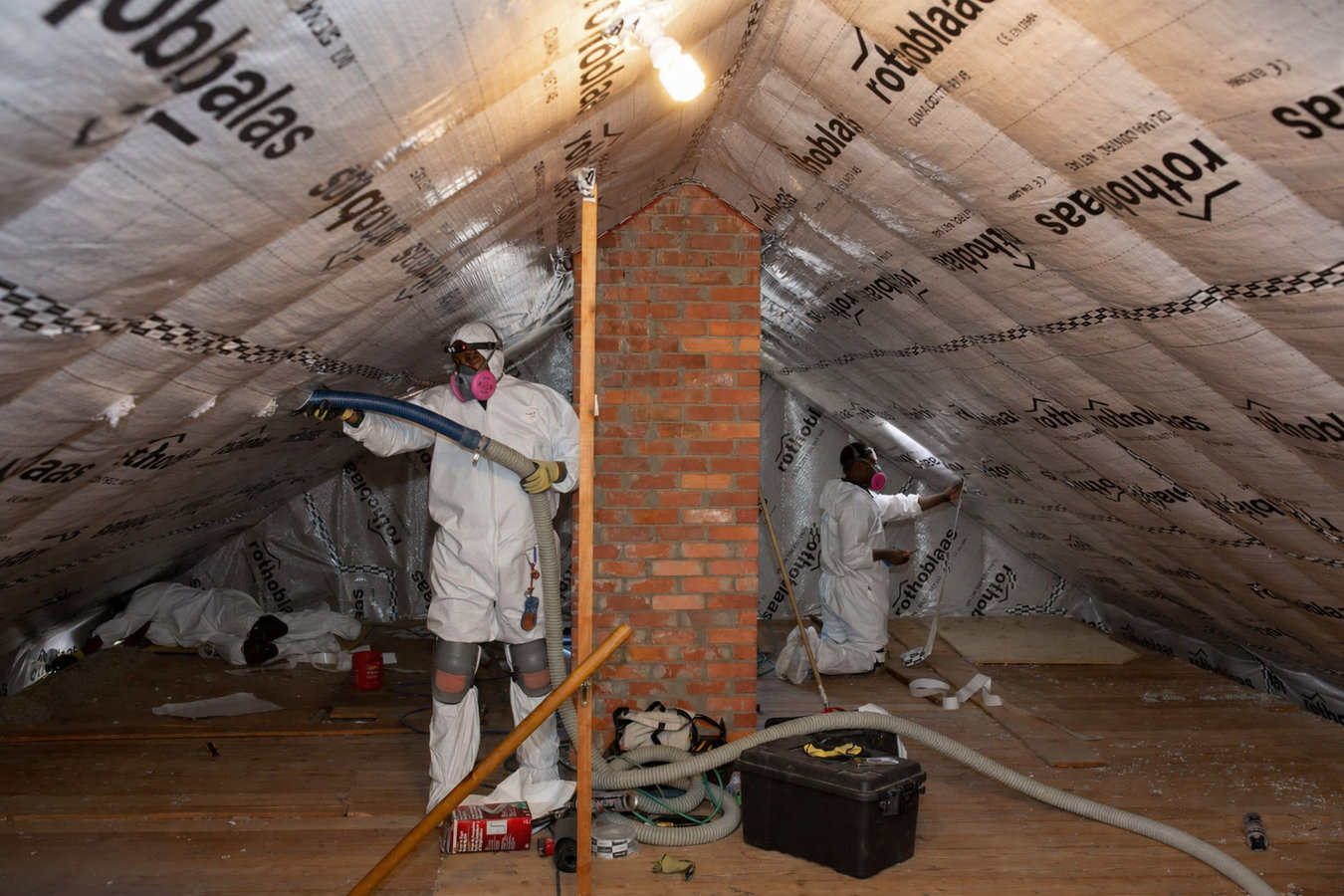
Hot attic air is pushing through gaps in your ceiling all summer long. Attic air sealing closes those gaps so your AC can finally maintain the temperature you set without running constantly.
Attic air sealing in Laredo means finding and closing the gaps in your attic floor where conditioned air escapes and hot attic air pushes in, most jobs on a standard single-story home complete in one day with no disruption to your routine inside the house.
Insulation slows heat transfer, but it cannot stop air from moving through gaps around light fixtures, plumbing pipes, and wiring that passes through your ceiling. Attic air sealing closes those pathways first. Adding insulation on top of a properly sealed attic floor delivers far better results than insulation alone, which is why most contractors recommend doing both in the same project.
For the most complete attic upgrade, air sealing pairs naturally with our crawl space vapor barrier service when moisture control below the home is also a concern. For the air sealing side alone, our full air sealing services page covers whole-home approaches beyond the attic floor.
If your electricity bills have crept up year over year but your air conditioner has been serviced and is working properly, air leaks in your attic are a likely cause. In Laredo, where summer cooling costs are among the highest in Texas, a home with significant attic air leaks can cost substantially more per year than a similar sealed home. If your bill feels out of proportion to your square footage, an energy audit is worth scheduling.
When an attic has gaps, hot air does not leak in evenly. It tends to concentrate in certain areas depending on where the gaps are located. If you have a bedroom or living area that never cools down no matter how long the AC runs, that room likely sits above a section of ceiling with more air leaks than the rest of the house. This is one of the most common complaints Laredo homeowners have in July and August.
Pull down your attic access hatch and look at the edges. If you can see light coming through gaps around the frame, air is moving through those same gaps. Dust streaks or discoloration around recessed ceiling lights are another visible sign that air is being pulled through the fixture from the attic. You can check these yourself without any tools.
Homes built before the mid-1990s in Laredo were constructed under older standards that did not require the level of air sealing that is normal today. If you have lived in your home for years and cannot recall any insulation or sealing work being done, there is a strong likelihood your attic has gaps that have never been addressed. An energy audit will confirm this quickly.
We seal every penetration in your attic floor: light fixtures, plumbing pipes, electrical wiring, HVAC chases, wall top plates, and the attic hatch itself. The goal is not to seal the easiest spots but to close every pathway that allows air to move between your attic and your living space.
For homes where insulation also needs to be addressed, we coordinate the sealing and insulation work in the right order so each layer performs as designed. Our crawl space vapor barrier service extends moisture protection to the underside of the home for homeowners who want a complete thermal and moisture envelope. For whole-home air tightness that goes beyond the attic, our air sealing services cover exterior walls, rim joists, and other leakage points throughout the structure.
We use both spray foam and acoustical caulk, selecting the right material for each type of penetration. Rigid foam board is used where gaps are too large for caulk but too irregular for spray foam to adhere cleanly.
Best for homes where light fixtures, pipes, and wiring have never been sealed since original construction.
Best for addressing the two most common and easily overlooked air leakage points in older Laredo homes.
Best for homeowners who want to address both air leakage and insulation depth in a single coordinated project.
Best for homeowners planning a blown-in or spray foam upgrade who want to seal first for maximum performance.
Laredo regularly records summer temperatures above 100 degrees, and attic temperatures in this climate can reach 140 degrees on a typical July afternoon. When your attic is that hot and your ceiling has gaps in it, your air conditioner is fighting a losing battle every day from April through October. The payback period for air sealing work is shorter here than in cooler climates because your cooling system runs so many months of the year. The U.S. Department of Energy estimates that air leaks account for 25 to 40 percent of the energy used for heating and cooling in a typical home.
Many Laredo neighborhoods, including established areas like Del Mar, Santo Nino, and the older subdivisions near downtown, have homes built in the 1960s through 1980s when builders did not seal attic penetrations the way they do today. These homes often have dozens of small gaps around original plumbing, light fixtures, and wall top plates that have never been touched. If your home is more than 30 years old and has never had an energy audit, air leaks are almost certainly present. The Building Performance Institute certifies contractors in the measurement and sealing methods that make this work verifiable, not just a guess.
We work throughout the region, including McAllen, Edinburg, and Mission. All three cities share Laredo's climate profile and the same mix of older housing stock where attic air sealing has historically been overlooked.
Call or submit a request online and we will respond within 1 business day. We will ask about your home's age and square footage so we arrive prepared. Most Laredo contractors can schedule an initial visit within a few days to a week.
We spend time in your attic measuring gaps, checking moisture conditions, and assessing ventilation before quoting anything. Some contractors use a blower door test at this stage to give you a measurable baseline of air leakage before work begins.
The crew works across your attic floor, applying foam and caulk to every gap, crack, and penetration they find. On a standard single-story Laredo home this typically takes one full day. Your daily routine inside the home continues uninterrupted.
Once the work is complete, we walk you through what was sealed and answer any questions. Materials cure within hours, so there is no waiting period. You should notice more consistent temperatures within the first few days.
Free on-site assessment, written estimate, response within 1 business day. No pressure, no obligation.
(956) 539-8021We have worked in homes throughout Laredo, including older neighborhoods like Del Mar and Santo Nino where pre-1990s construction means dozens of unsealed penetrations are the norm. We know what to expect before we open the hatch.
We verify permit requirements with the City of Laredo's Building Inspections Department before starting and coordinate that paperwork for you. Every project is documented with photos, so you have a clear record if the home changes hands.
We do not quote attic air sealing over the phone. Attic conditions vary too much from house to house in Laredo for a phone number to be meaningful. You get a written estimate after a real visit, with no obligation and no pressure.
For jobs where a blower door test is used, you receive a measurement that shows exactly how much the air leakage improved. That number is not just reassuring, it supports federal tax credit documentation under the Inflation Reduction Act.
We have been working on Laredo homes since 2022, and attic air sealing is one of the most consistent improvements we see deliver real results within the first billing cycle. Every estimate is written and specific, every job is documented, and we are available to answer questions after the work is done. That is how we have built a base of repeat customers throughout Laredo and South Texas.
Add moisture protection below your home to complete the thermal and air envelope from attic to foundation.
Learn moreExtend air tightness to exterior walls, rim joists, and other leakage points throughout the whole home.
Learn moreSpring booking slots fill fast. Call today or submit a request online and we will respond within 1 business day with a free, no-obligation estimate.