
Loading...
Serving Laredo, TX and surrounding areas. (956) 539-8021
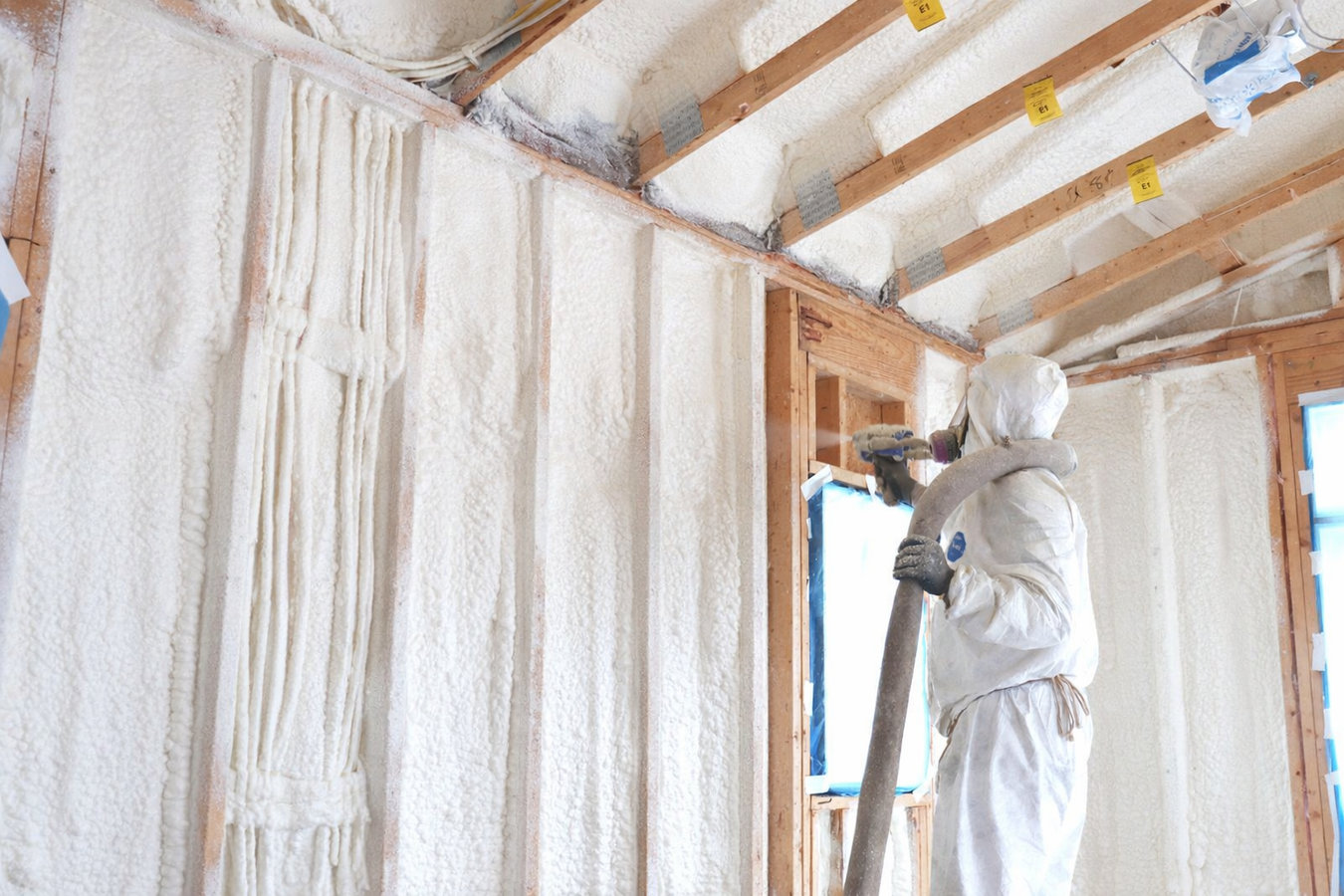
Laredo summers push standard insulation past its limits. Closed-cell foam seals air gaps and resists moisture in one application so your home stays cool and your walls stay dry.
Closed-cell foam insulation in Laredo seals air leaks and insulates in a single application -- most residential attic and crawl space jobs complete in one to two days, with the foam fully hardened and ready for re-entry within 24 hours.
Most insulation materials only slow heat transfer. They do nothing to stop air from moving through gaps around pipes, wires, and framing connections. Closed-cell foam expands on contact, hardens into a rigid layer, and bonds to the surface -- sealing gaps while insulating. It also has a very low rate of water vapor passing through it, which makes it a fundamentally different material from fiberglass or cellulose in Laredo's periodically humid climate.
If you are deciding between foam types, our open-cell foam insulation page covers the trade-offs for interior walls and ceilings where moisture is not the primary concern. For the broader picture of your home's envelope, spray foam insulation covers how both foam types are applied across different parts of the home.
If your AEP Texas bill has been rising and you have not added appliances or changed your habits, your home's insulation is a likely culprit. In Laredo's climate, a home leaking conditioned air works your AC harder and longer than it should. A noticeably high bill during summer months, especially compared to neighbors with similar-sized homes, is one of the clearest signs your insulation is not doing its job.
If one bedroom, a back hallway, or a room directly under the roof feels noticeably warmer than the rest of your home even with the AC running, that area likely has inadequate insulation or air gaps letting heat pour in. In Laredo, where attic temperatures can reach 150 degrees or more on a summer afternoon, a poorly insulated ceiling between the attic and living space is one of the most common causes of hot spots.
Take a flashlight into your attic on a sunny day. If you can see daylight coming through gaps around pipes, wires, or where the wall meets the roof, those are air pathways working against your comfort and energy bill every day. Even small gaps add up quickly in a climate as extreme as Laredo's, and they are exactly the kind of problem closed-cell foam is designed to fix permanently.
Homes built before the mid-2000s in Laredo were constructed under older energy codes that allowed for much less insulation than what is recommended today. If your home has original insulation that has never been replaced, there is a very good chance it is underperforming. Fiberglass batts from that era often compress and shift over time, leaving gaps and thin spots that were not there when the home was new.
We install closed-cell foam in attics, crawl spaces, exterior walls, rim joists, and below-grade spaces throughout Laredo. Every job begins with an on-site visit to see the actual space before we recommend anything.
For attics, closed-cell foam is applied directly to the underside of the roof deck or to the attic floor, sealing every gap around pipes and wiring that other insulation types miss. If you want to understand how closed-cell compares to open-cell for a specific location in your home, our open-cell foam insulation service covers when and where that lower-density option makes more sense. For whole-home spray foam projects that include both types, spray foam insulation explains the full scope of what is possible.
We match foam thickness to each location. A thin layer at a rim joist performs very differently from a thicker application at an attic rafter bay, and we do not apply a single standard depth across every surface. The written estimate you receive will specify thickness by location.
Best for homeowners who want maximum heat resistance per inch in a space where rafter depth limits how thick the insulation can be.
Best for below-grade spaces where moisture pressure from Laredo's clay soils makes a vapor-resistant material the smart choice.
Best for the framing connection between floor and foundation wall, where small air gaps let significant amounts of heat and moisture into the home.
Best for walls being renovated or opened up, where the installation window exists to add a continuous, gap-free insulation and air barrier layer.
Laredo records some of the highest sustained summer temperatures in the country, with a cooling season that stretches from April through October. Attic temperatures can reach 150 degrees or more on a typical summer afternoon. Any gap in your insulation or air barrier is a direct path for that heat to pour into your living space. Closed-cell foam's high thermal resistance per inch makes it one of the most efficient choices for a climate this demanding, especially in tight attic rafter bays where depth is limited.
A significant share of Laredo's residential neighborhoods were built in the 1960s through 1980s with insulation standards far below what is recommended today. Many of these homes have never been updated. Fiberglass batts from that era have often compressed, shifted, or absorbed moisture over the decades, leaving the home much more exposed to heat than the homeowner realizes. In an older Laredo home, upgrading to closed-cell foam in the attic is often one of the highest-impact improvements available.
We serve homeowners throughout the region, including McAllen, Pharr, and Edinburg. Each of these communities shares Laredo's heat profile and the same case for closed-cell foam over conventional insulation in any space exposed to South Texas summer temperatures.
Call or fill out the form and we will respond within 1 business day. We will ask a few basic questions about the space -- what area you want insulated, whether it is accessible, and whether you have had any moisture issues. Do not trust a quote that comes without a site visit.
We look at the area to be insulated, check for existing moisture damage or gaps, and measure the space. A written estimate follows within a day or two, clearly stating the area covered, the foam thickness, and the total price. If anything is unclear, ask before you sign.
For certain projects in Laredo, a building permit may be required before work begins. We will let you know whether your job requires one and handle the application on your behalf. Once any required permits are in place, we confirm a start date. Permitted work is inspected -- an independent check that the job was done correctly.
Everyone, including pets, must be out of the home on the day of spraying. The crew sets up protective coverings, applies foam in layers, and checks thickness at multiple points. After curing and ventilation, we walk you through the finished work, confirm coverage and thickness, and leave you with written documentation.
Written quote with thickness and coverage specified. No obligation to book.
(956) 539-8021We have installed closed-cell foam throughout Laredo, from attics in older downtown neighborhoods to crawl spaces in newer North Laredo subdivisions. South Texas heat loads require different decisions than northern climates, and we know the difference.
We measure foam depth at multiple points during installation and show you the results. Uneven or thin spots mean some areas are not getting the protection you paid for, and we do not leave without confirming the coverage is consistent.
We do not quote closed-cell foam jobs over the phone because every space and access condition is different. You get a real written estimate after a real on-site visit, with no obligation to book.
You receive a record showing the area covered, the foam product used, and the thickness applied. That documentation adds value when you sell the home and gives you a clear baseline if you ever have questions years down the road.
Proper closed-cell foam installation requires the right product, the right thickness, and a contractor who takes the re-entry safety steps seriously. The Spray Polyurethane Foam Alliance publishes training and installation standards for spray foam contractors. We also encourage homeowners to review available rebate programs through AEP Texas before scheduling work -- lining up any available incentives before the job is done is much easier than trying to claim them after.
A lower-density foam option suited to interior walls and ceilings where sound control is the goal and moisture resistance is not a requirement.
Learn moreWhole-home spray foam service covering attics, walls, and crawl spaces using the right foam type for each location.
Learn moreEvery week your attic goes unsealed is another week your AC runs longer than it has to. Call or request a free estimate today and get a written quote with no obligation.