
Loading...
Serving Laredo, TX and surrounding areas. (956) 539-8021
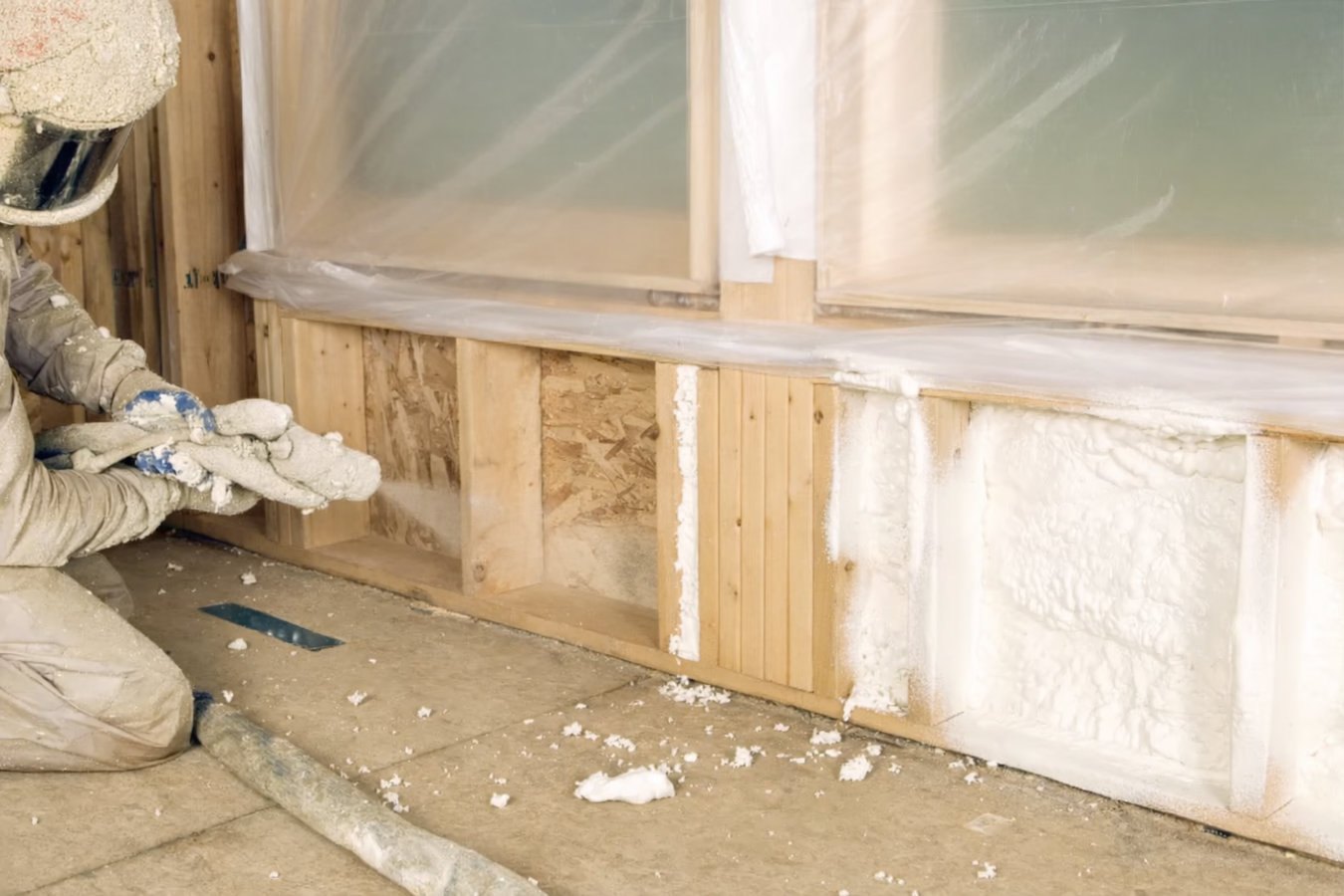
If your AEP Texas bill keeps climbing or certain rooms never cool down, your home likely has air leaks that insulation alone cannot fix. We find every gap and seal it so your AC stops fighting a losing battle.
Air sealing services in Laredo find and close the gaps, cracks, and penetrations throughout your home where outside air enters and conditioned air escapes, most residential jobs take one to two days with the majority of work in the attic and crawl space.
Many Laredo homes, especially those built before the 1990s, were constructed before modern energy standards required tight building envelopes. The gaps around plumbing, electrical boxes, recessed lights, and attic hatches were simply never sealed. Every year those openings let summer heat in and cooled air out, and the cost shows up on your AEP Texas bill every month from April through October.
Air sealing and insulation work together but solve different problems. Sealing the gaps first makes any insulation you add far more effective. If you are also considering basement insulation or dedicated attic air sealing, those services can often be combined with whole-home air sealing in a single visit.
If your electricity bill has crept up over the past year or two without any obvious reason, air leaks are a likely culprit. In Laredo's heat, even small gaps let enough hot air in to force your AC to run longer, and that shows up directly on your bill every month from April through October.
If one bedroom or the back of your house feels significantly warmer than the rest even when the AC is running, that area likely has more air leaks than others. In Laredo, where afternoon temperatures can push past 105 degrees, uneven cooling is a strong signal that outside air is getting in somewhere it should not be.
Hold your hand near an electrical outlet on an exterior wall on a hot afternoon. If you feel warm air coming through, that is a gap in your building envelope. These small openings add up quickly across a whole house and are exactly what air sealing addresses.
Homes built in Laredo before the mid-1990s were constructed under older building codes that did not require the same level of air tightness as today's standards. If your home has never had a professional energy checkup, there is a reasonable chance gaps have been quietly driving up your cooling costs for years.
We provide whole-home air sealing that covers every problem area: attic floors, crawl spaces, rim joists, around pipe and wire penetrations, recessed light fixtures, and the transitions between conditioned and unconditioned space. The work uses caulk, foam, and weatherstripping materials depending on the location and the size of the gap. Most of the work happens in spaces like the attic that you rarely use during the day.
For homeowners who want to address the attic specifically, our dedicated attic air sealing service focuses on the ceiling plane, rafter bays, and attic hatch, which are the highest-impact leakage points in most South Texas homes. For below-grade spaces, basement insulation paired with perimeter sealing addresses both thermal and air intrusion at the foundation level.
We use blower door testing before and after every job, which gives you actual numbers showing the improvement rather than a general claim. This documentation can also support AEP Texas rebate applications and federal energy tax credit claims, so you have paperwork to show for the investment.
Best for homes where gaps are spread throughout multiple areas and a single comprehensive job makes the most sense.
Best when the attic floor and ceiling plane are the primary source of heat gain and cooled-air loss in the home.
Best for homes where unconditioned crawl space air is entering the living area through floor penetrations and gaps.
Best as a starting point for any home with unexplained high bills or uneven temperatures to locate and quantify leaks.
Laredo consistently ranks among the hottest cities in the United States. Summer temperatures exceed 100 degrees regularly, and the cooling season runs from April through October. When your home has air leaks, that heat is not just radiating through your walls, it is actively flowing through gaps as outdoor pressure and indoor pressure fluctuate throughout the day. In this climate, air leaks drive up cooling costs faster than almost anywhere else in the country.
Many homes in Laredo's established neighborhoods near downtown and in older colonias were built before modern building envelope requirements. These homes often have gaps around every plumbing penetration, electrical box, and attic hatch that were never addressed. The same homes also experience bursts of high humidity during the summer monsoon season from July through September, which means uncontrolled air infiltration carries moisture into wall cavities and attic spaces where it can create long-term problems.
We serve homeowners across South Texas, including customers in Laredo, McAllen, and Edinburg. Every market we work in shares the same challenge: homes that were built for a mild climate are expected to perform in one of the hottest regions in the country.
Reach out by phone or form and we will follow up within 1 business day. We will ask about your home's age and what has been prompting your concern, whether that is high bills, hot rooms, or something else.
We walk through your home, check the attic and crawl space, and run a blower door test that pressurizes the house and makes every air leak visible. This step tells us exactly where to focus rather than guessing.
After the assessment you receive a written estimate that breaks down what we found and what we recommend. This is the right moment to ask about AEP Texas rebates, permits, and whether pre- and post-testing is included in the price.
The crew seals identified problem areas throughout the attic, crawl space, and around penetrations. Once complete, we retest with the blower door and share before-and-after numbers so you can see the improvement in plain terms.
Free in-home estimate with blower door assessment. No obligation. Response within 1 business day.
(956) 539-8021We have completed air sealing projects throughout Laredo, from older homes in established neighborhoods to newer construction in North Laredo. We know what a mid-1990s home looks like inside an attic in South Texas heat.
We run a blower door test before we start and again after we finish. That gives you actual numbers showing how much the leakage dropped, not just a contractor's assurance that the work made a difference.
We do not quote air sealing over the phone because every home has a different leak profile. You get a real estimate after a real visit with no charge and no obligation to book.
AEP Texas serves Laredo and offers energy efficiency programs for qualifying improvements. We can document your project in a way that supports a rebate application, so you are not leaving money on the table after the job is done.
Air sealing is one of the most cost-effective improvements a Laredo homeowner can make, and the U.S. Department of Energy and AEP Texas both support the investment with incentive programs. We handle the documentation so you can take advantage of every dollar available to you.
Insulate and seal below-grade spaces to stop heat and moisture from entering through the foundation perimeter.
Learn moreFocused sealing of the attic floor, rafter bays, and attic hatch, the highest-impact air leakage points in most South Texas homes.
Learn moreCall today or submit a form for a free air sealing assessment. Summer heat is already here, and every week without sealed gaps is another month of higher bills.